A’maal baraye Farakhi-e-Rizq

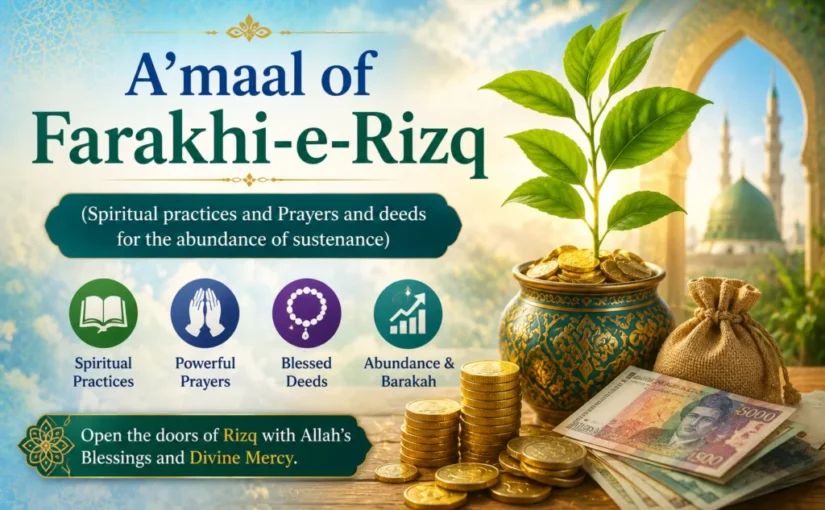
In the Arabic language, where the word Rizq conveys the meaning of daily bread and sustenance, it is also used to denote all forms of divine bounties. Accordingly, within the Holy Quran, it has been utilized for wealth and assets, for the provisions of life, and has also been used for guidance and spiritual gnosis (Hidayat-o-Ma'rifat). Briefly, we can state that the word Rizq is used for every single bounty bestowed upon the servants by Allah Almighty. Allah Almighty has commanded mankind in general, and Muslims in particular, to distinguish between Rizq-e-Halal (lawful sustenance) and Rizq-e-Haram (unlawful sustenance); earning a Halal livelihood and abstaining from Haram is just as essential Read more [...]

Fazilat-e-Surah Fatiha ma’a Zakat

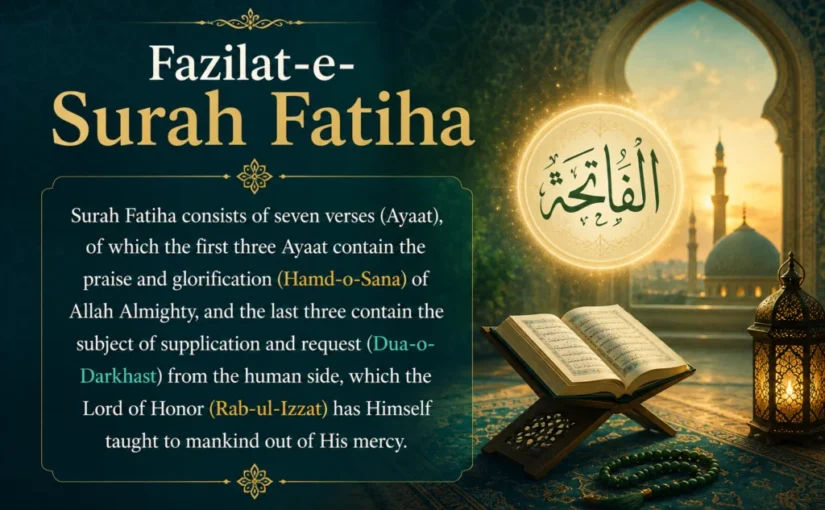
The companion of the Prophet (Sahabi-e-Rasool), Hazrat Abu Zaid رضی اللہ عنہ narrates: "Once it was night time, and I was walking with the Beloved Master, the Makki Madani Mustafa صلى اللہ علیہ و آلہ و سلم through a street of Madinah Munawwarah. Suddenly, a voice came from a house; a Sahabi رضی اللہ عنہ was reciting Surah Fatiha in the Tahajjud prayer. Hearing this, the Messenger of Allah, the embodiment of light (Noor-e-Mujassam) صلى اللہ علیہ و آلہ و سلم stopped and began listening to the recitation of Surah Fatiha. When the Sahabi رضی اللہ عنہ completed the recitation of Surah Fatiha, the Last Prophet of Allah, the Hashimi Read more [...]

Tark-e-Jamali-o-Jalali

The details written by authentic Aamilheen and Kamileen in books regarding the avoidance of animal products (Tark-e-Haywanat) for the purpose of Chilla Kashi are as follows: There are two types of Tark-e-Haywanat: Jamali Jalali In Tark-e-Haywanat-e-Jamali, the items intended to be avoided include every type of meat, egg, fish, vinegar, raw or cooked onion, garlic, Jimaa (marital intimacy), and refraining from Nazar-e-Bad (the evil eye), etc. In Tark-e-Haywanat-e-Jalali, one must refrain from every type of meat, egg, fish, vinegar, raw or cooked onion, garlic, honey, Mushk (musk), every type of Kushta (calx), and any grain grown using fertilizer. It also includes refraining Read more [...]

Jinnat-o-Muwakkilat (The Jinn and Spiritual Entities / Guardians)

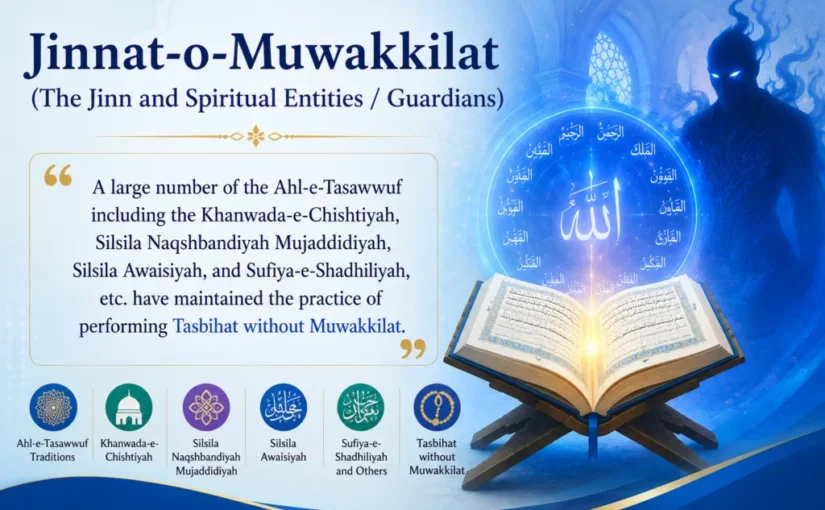
A large number of the Ahl-e-Tasawwuf including the Khanwada-e-Chishtiyah, Silsila Naqshbandiyah Mujaddidiyah, Silsila Awaisiyah, and Sufiya-e-Shadhiliyah, etc. have maintained the practice of performing Tasbihat without Muwakkilat. If the objective is the Tasbih or Chilla of Asma al-Husna, Quranic verses (Ayaat) and Surahs, Darood Shareef, or other Masnoon Azkar, they give preference solely to Tasbihat without Muwakkil. This is done so that by raising one's spiritual capacity through praiseworthy qualities (Ausaaf-e-Hameeda), the subtleties of the heart (Lataif-e-Qalbi), and the tranquil self (Nafs-e-Mutmainnah), a station is reached where special bounty, grace, and divine lights (Anwaar) are Read more [...]

Amulets (Taweezaat) Containing Non-Islamic Words

In the contemporary era, every single individual is entangled in one distress or another. Someone faces livelihood issues, somewhere there is an impediment in marriage, another is a victim of a commercial Bandish (binding), while yet another is seeking deliverance from Aseebi (demonic/jinn) afflictions. It appears as though every person is Sihr-zada (spellbound). There is a Bandish on everyone; everyone's relative is consumed by jealousy (Hasad) and is getting Jadu (magic) executed upon them. The situation has degraded to the extent that even if a minor injury is sustained, it is suspected to be the result of Jadu. We too are a strange people; when we are prosperous, we do whatever our heart Read more [...]
error: Content is protected !!